Newsletter Subscribe
Enter your email address below and subscribe to our newsletter

 ByJohn A
AI transforms home security by enabling real-time perception, centralized analytics, and automated responses with minimal human input. Systems leverage on-device processing and cloud-enabled models to detect threats while reducing false alarms through pattern recognition and anomaly detection. Privacy controls and modular governance balance data use with resilience. The discussion centers on feature trade-offs, costs, and deployment considerations, leaving readers with questions about integration challenges and the evolving threat landscape that warrant further exploration.
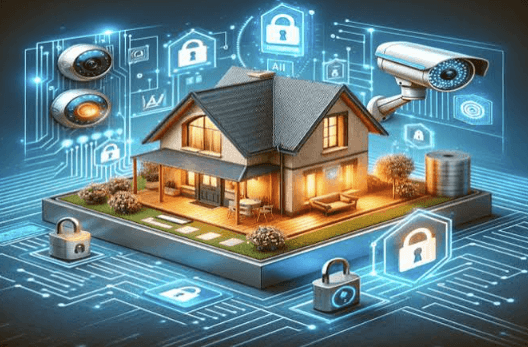
AI enhancements transform home security systems by enabling real-time perception, smarter decision-making, and automated response without human intervention.
The framework relies on AI analytics to interpret sensor data, identify patterns, and reduce false alarms.
Cloud processing centralizes data, enabling scalable model updates and cross-device learning.
This approach balances privacy with resilience, elevating system reliability and user autonomy without tethering control to external actors.
Threat detection in modern home security systems relies on AI-driven perception to continuously monitor sensors, video feeds, and behavioral patterns.
AI analyzes anomalies via calibrated models, minimizes false alarms, and accelerates responses while preserving privacy.
However, AI bias can skew threat assessments, and energy impact from continuous sensing must be managed through efficient hardware, adaptive sampling, and edge processing to sustain reliable protection.
Choosing AI-enhanced security involves balancing feature sets, privacy safeguards, and total cost of ownership to meet reliable protection without overreach.
The analysis emphasizes modular capabilities, configurable privacy controls, and transparent data governance.
AI privacy and cost considerations frame vendor selection, data minimization, and on-device processing vs. cloud reliance.
Clear benchmarks enable informed decisions while preserving user autonomy and system resilience.
Real-world AI-enabled home security scenarios span proactive monitoring, rapid incident assessment, and automated response coordination across both indoor and outdoor environments. Systems demonstrate anomaly detection, cue-based alerts, and evidence compilation for investigations.
Privacy considerations include security camera privacy implications and data minimization. Transparency remains essential, addressing AI training data disclosure, model updates, and user control without compromising operational effectiveness or freedom to innovate.
AI systems mitigate false alarms by multi-sensor fusion, corroboration thresholds, and adaptive learning; results include false alarm reduction and targeted alerts, while acknowledging privacy concerns and ensuring data minimization, encryption, and transparent policy controls for freedom-minded users.
Yes, AI systems can learn from non-visual data streams, though effectiveness depends on data quality, fusion methods, and privacy safeguards. They must address AI data privacy and bias mitigation while preserving analytical rigor and user freedom.
See also: AI in Health Monitoring Technologies
AI security systems do not always require constant internet; they may operate offline with local processing, yet cloud connectivity enhances updates. The irony lies in claiming autonomy while weighing privacy considerations and offline operation for robust, freedom-seeking users.
AI customization possibilities vary; threat detection rules can be tailored from broad heuristics to granular, scenario-specific thresholds. The system supports parameterization, logging, and auditing, enabling disciplined experimentation while maintaining reliability and user autonomy in decision-making.
The ethics of surveillance hinge on balancing security benefits against privacy implications, with transparency, accountability, and proportionality guiding deployment. Analysts emphasize governance, data minimization, and user autonomy to safeguard civil liberties while enabling responsible AI use.
AI-enhanced home security aggregates analytics, accelerates alerts, and augments autonomy. Centralized cloud learning complements on-device processing, reducing false alarms while preserving privacy through modular governance. Sensor streams, video analytics, and anomaly detection converge to distinguish dynamics, deter distractions, and deliver decisive defense. Real-time reasoning, rapid responses, and resilient architectures enable proactive protection without perturbing privacy. Practitioners prioritize programmable policies, scalable updates, and cost-conscious customization, ensuring secure stewardship of sensitive data while sustaining steady, stateful surveillance and safeguarding space.